When Fame Meets the Law: What Justin Timberlake's DWI Case Reveals About Reputation Control
I've spent years watching how public figures handle reputation crises. Some face them head-on. Others try to bury the evidence.
Justin Timberlake's approach falls into the second category.
On June 18, 2024, at 12:37 a.m., Timberlake was arrested in Sag Harbor, New York, after running a stop sign and failing to maintain his lane. The arresting officer reported bloodshot and glassy eyes, poor performance on field sobriety tests, and three refusals to take a breathalyzer over 40 minutes. He told the officer he'd had "one martini" at the American Hotel.
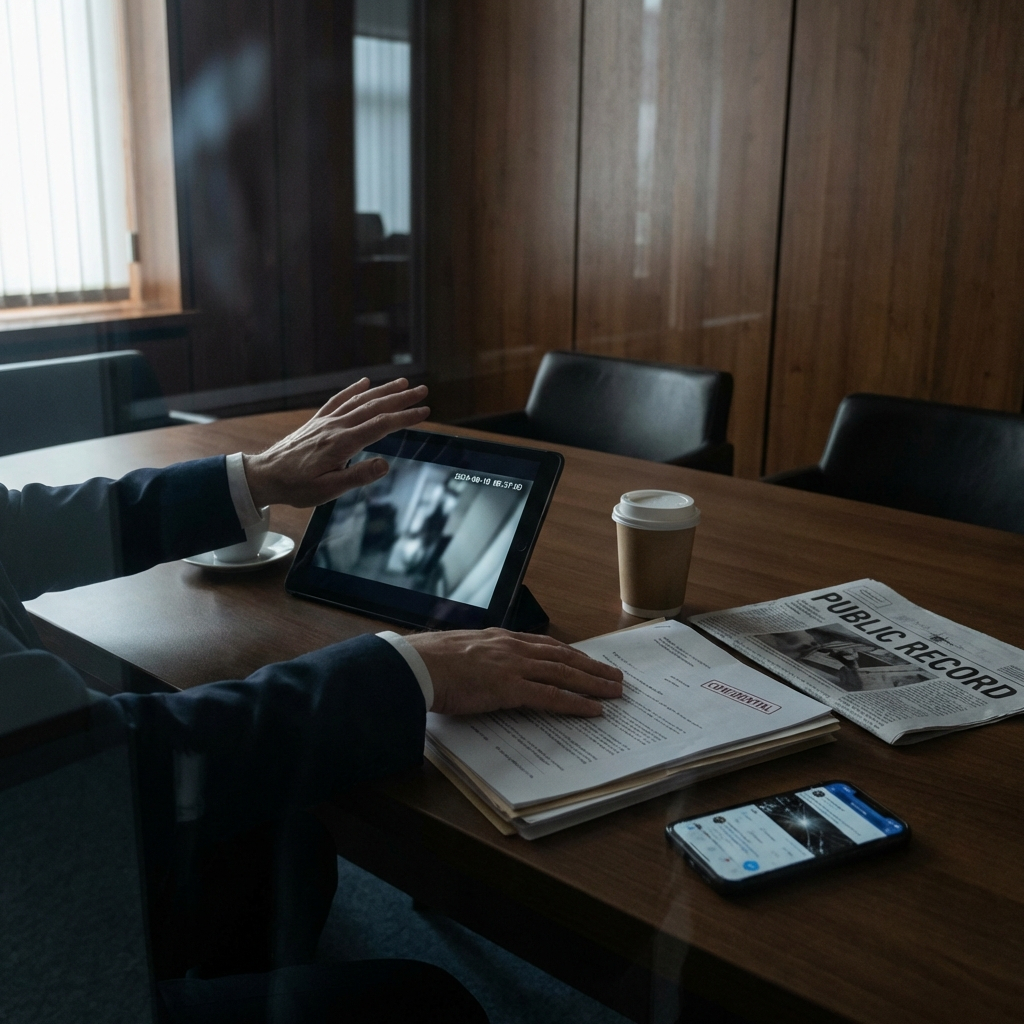
Fast forward to March 2026. Timberlake secured a temporary restraining order to block the release of approximately eight hours of bodycam footage from that arrest. His legal team argued the footage would cause "severe and irreparable harm" to his reputation and subject him to "public ridicule and harassment."
Here's what I find interesting about this case. It's not about whether Timberlake made a mistake. He pleaded guilty to driving while ability impaired in September 2024. He paid his fine, did his community service, and made a public safety statement.
This is about what happens when you try to control information that's already part of the public record.
The Transparency Problem
I've watched this pattern repeat itself. Someone faces a legal issue. They handle it through the courts. Then they try to prevent the public from seeing what actually happened.
The bodycam footage captures the initial stop, field sobriety tests, arrest, and Timberlake's confinement over several hours. Under New York law, police footage is public record. Multiple media organizations filed Freedom of Information Law requests for the footage.
Sag Harbor police refused to release it for nearly two years.
Judge Joseph Farneti granted the temporary restraining order on March 5, 2026. The Village of Sag Harbor now has until April 9, 2026, to file documentation explaining why the footage should be made available.
Think about what this means. A public arrest. A guilty plea. A public safety announcement. But the actual evidence? That stays hidden.
This creates a gap between what you say happened and what people can verify actually happened.
The Real Cost of Suppression
I've seen this dynamic play out in reputation management countless times. When you block information, you don't eliminate the story. You change it.
The narrative shifts from "person made a mistake and took responsibility" to "person is hiding something."
Timberlake's case demonstrates this perfectly. After his guilty plea, he stood outside the courthouse and said: "Even if you've had one drink, don't get behind the wheel of a car. There's so many alternatives. Call a friend. Take an Uber. There's many travel apps. Take a taxi. This is a mistake that I made, but I'm hoping whoever's watching and listening right now can learn from this mistake. I know that I certainly have."
That's a solid public accountability moment. It acknowledges the mistake. It offers a clear message. It positions him as someone who learned something.
Then the legal team files to block the bodycam footage.
Now the story isn't about accountability. It's about what he doesn't want you to see.
Celebrity DUI: The Pattern You Can't Ignore
Timberlake isn't unique in this situation. He joins a long list of celebrities arrested for DWI in the Hamptons, including NASCAR CEO Brian France in 2018, chef Todd English in 2014, and NBA coach Jason Kidd in 2012.
The numbers tell a broader story. According to New York State Division of Criminal Justice Services, there were 26,581 DWI arrests in 2023, marking a 4.4% increase from the previous year. More than 5,000 drivers under the age of 21 are still arrested for DWI each year in New York.
Despite declining in recent years, over 10,000 Americans are still killed by drunk drivers annually. A drunk-driving death occurs every 15 minutes in the United States.
Here's what matters for reputation management: impaired driving is a universal equalizer. It doesn't matter how famous you are. Once you're behind the wheel, you're held to the same standard as everyone else.
A DUI arrest drops even the most recognizable public figures into the same legal machinery everyone else moves through, no matter how many streaming deals or chart-toppers they have.
What This Reveals About Reputation Risk
I work with clients who face reputation threats every day. The instinct to suppress damaging information is strong. I understand it. But suppression creates its own set of problems.
When you try to block public records, you signal that the reality is worse than what you've admitted. You give people permission to imagine the worst-case scenario.
The bodycam footage might show exactly what Timberlake described: a traffic stop, field sobriety tests, an arrest. Or it might show something more problematic. We don't know because we can't see it.
That uncertainty works against you.
Timberlake pleaded guilty to driving while ability impaired, which represents a blood alcohol concentration of .05-.07, compared to the .08 or higher threshold for DWI. He received a $500 fine with a $260 surcharge, 25 hours of community service, and a 90-day license suspension.
The judge initially called the penalties "minimal" before agreeing to the terms.
Those are the facts. They're not great, but they're manageable from a reputation standpoint. The suppression attempt makes them worse.
The Accountability Gap
High-profile DUI cases can influence public opinion on drunk driving. When celebrities are arrested for DUI, awareness campaigns often gain momentum, and conversations around impaired driving resurface.
Organizations like Mothers Against Drunk Driving and law enforcement agencies can use these cases to reinforce the importance of sober driving.
But that only works if the accountability is complete.
Partial accountability—where you admit the mistake but hide the evidence—creates skepticism. People wonder what you're not telling them. They question whether you've actually learned anything or if you're just managing your image.
I've seen this pattern destroy reputations that could have been preserved. The cover-up becomes the story. The suppression becomes the scandal.
What This Means for Anyone Managing Public Perception
If you're in a position where your actions are subject to public scrutiny, here's what Timberlake's case teaches you:
Transparency isn't optional when the record is already public. You can't suppress what's already documented and expect people to trust your version of events.
Accountability requires consistency. You can't make a public safety announcement about learning from your mistakes while simultaneously fighting to hide the evidence of those mistakes.
The story you're trying to prevent becomes the story. When you block information, you shift attention from the original incident to your attempt to control the narrative.
Legal rights don't equal reputation strategy. You might have the legal right to fight the release of certain information. That doesn't mean it's the right reputation move.
The gap between words and actions matters more than either alone. People judge you based on whether your behavior matches your statements. When those two things diverge, trust erodes.
The Path Forward
I don't know what will happen with Timberlake's case. The court will decide whether the bodycam footage gets released. But the reputation damage from the suppression attempt is already done.
The better path—the one I recommend to clients facing similar situations—is complete transparency when the facts are already documented. You don't get to control the narrative when the evidence exists in public records.
You can control your response to it. You can provide context. You can demonstrate what you've learned and how you've changed. But you can't make it disappear.
Timberlake's public safety statement was the right move. The legal fight to suppress the footage undermines it.
This is the core tension in modern reputation management: the instinct to hide conflicts with the reality that transparency is often the only viable strategy.
Why This Matters to You
You might not be a celebrity. You might never face a DUI arrest. But you will face moments where your instinct is to suppress information that makes you look bad.
This case shows you what happens when suppression becomes the strategy.
The original incident becomes less important than your attempt to hide it. Your credibility takes a bigger hit from the cover-up than from the mistake itself.
When you're managing your reputation—whether personal or professional—the question isn't whether you've made mistakes. Everyone has. The question is whether you're willing to face them openly or whether you'll spend your energy trying to control what people can see.
One approach builds trust over time. The other erodes it.
I've watched both paths play out hundreds of times. The outcome is predictable.
Key Takeaways
Suppression changes the story. When you block public records, the narrative shifts from your mistake to what you're hiding.
Partial accountability creates skepticism. You can't admit fault while fighting to hide the evidence and expect people to trust you.
Legal rights and reputation strategy are different. What you can do legally isn't always what you should do strategically.
Transparency is the only viable path when facts are documented. You don't control the narrative when evidence exists in public records.
The gap between words and actions determines credibility. People judge you based on consistency, not individual statements.
Here's my question for you: When you've faced a situation where transparency felt risky, what helped you decide whether to be open about it or try to control the information? What did you learn from that choice?

